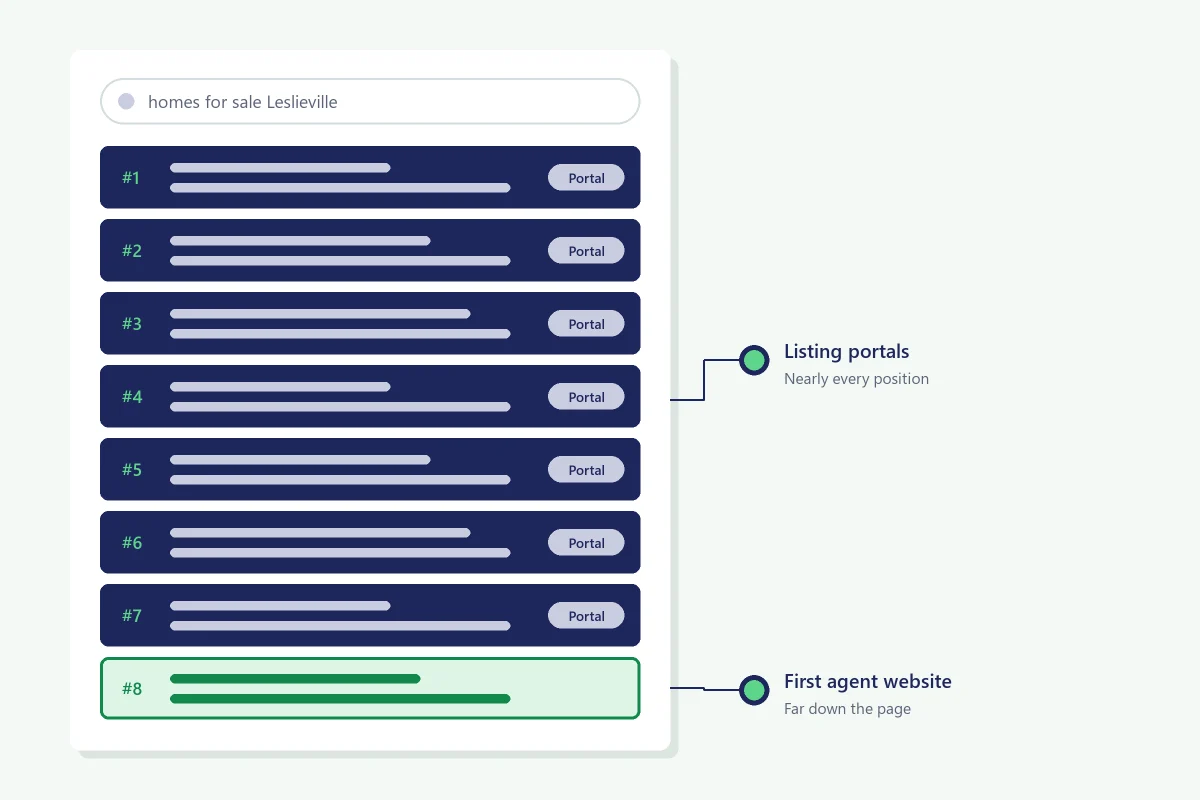
A listing feed is the first thing that separates this field from every other local business. When your site runs an IDX or MLS feed, it publishes thousands of pages that also exist, word for word, on every other site using that feed. Google sees little reason to rank your copy of them, and a site made mostly of duplicates can struggle to get its original pages taken seriously. So part of the job is subtraction: deciding which feed pages should be indexed at all, controlling the endless URLs that search filters create, and setting a rule for listings that sell or expire so they stop piling up as soft 404 errors.
The second difference is time. Someone may read your guide to Leslieville in March and call an agent in October. One visit rarely converts, which makes the newsletter signup, the saved search, and the monthly market update as important as the first ranking.
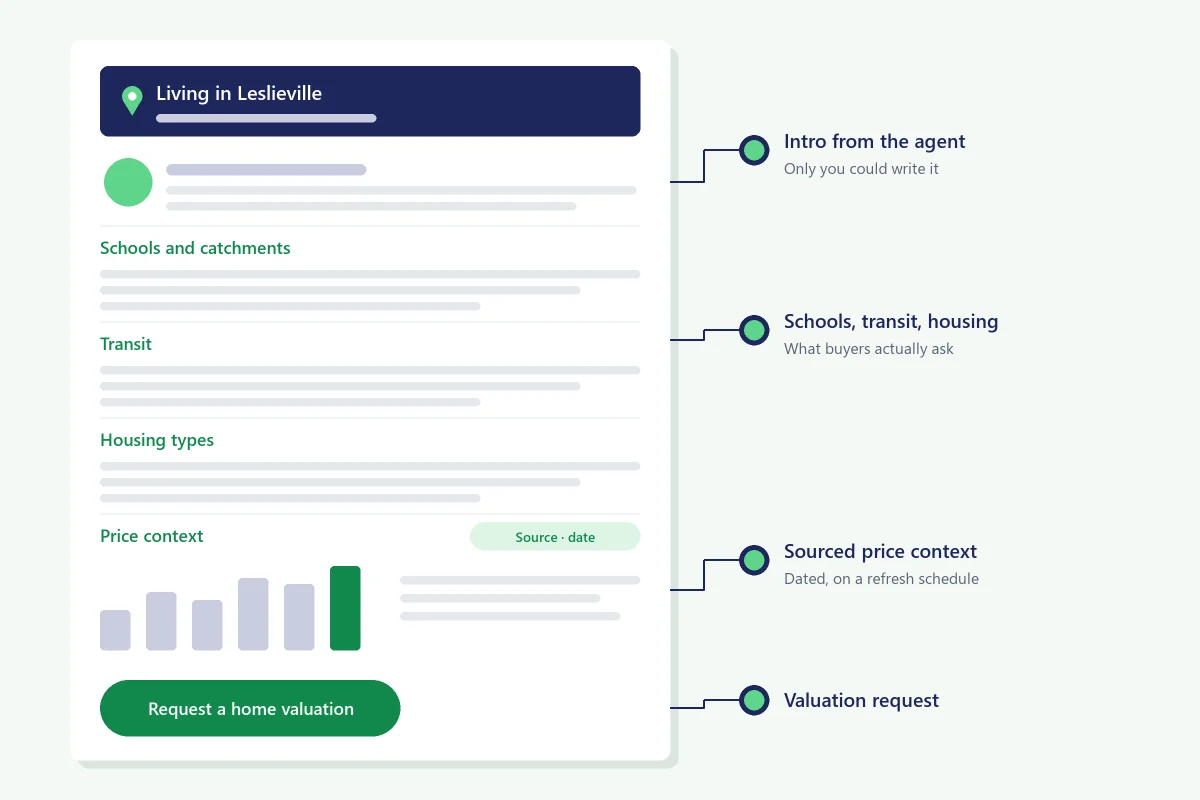
Third, the market moves. A price trend paragraph written last spring is wrong today, and stale numbers on a page about money erode trust quickly. Content here needs a maintenance schedule.
Finally, advertising is regulated. In Ontario, RECO rules require the brokerage to be clearly identified, and claims such as top agent need substantiation. CREA controls how the REALTOR® and MLS® marks may be used. SEO copy that ignores this creates a problem for you, and the agency that wrote it walks away.