


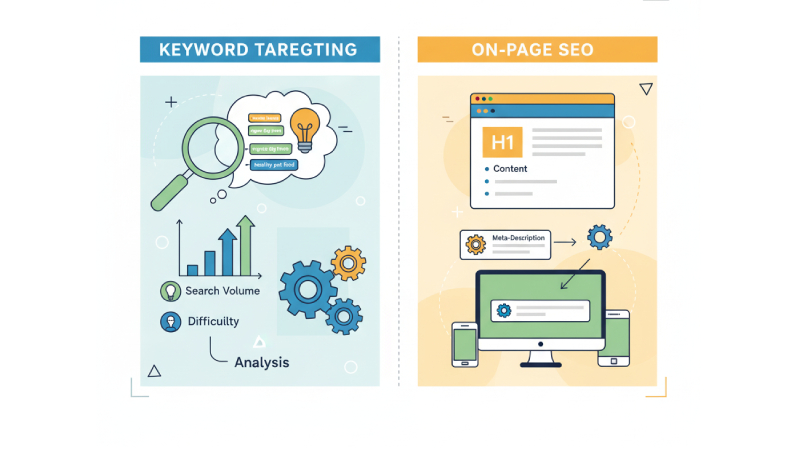
Did you know that mastering keyword targeting and on-page SEO can boost your website’s visibility by up to 50%? This visual guide will walk you through each step, from selecting the right keywords to optimizing your content effectively. By following these strategies, you’ll enhance your site’s search engine performance and attract more organic traffic. Let’s dive into the essentials of keyword targeting and on-page SEO to elevate your online presence.
Table of Contents
Introduction
Embarking on the journey of keyword targeting and on-page SEO is essential for enhancing your website’s visibility and attracting relevant traffic. This visual guide provides a step-by-step approach tailored for beginners, focusing on effective strategies to optimize your content.
Understanding the significance of keyword targeting is the first step. By identifying and integrating the right keywords, you can align your content with user intent, ensuring it meets the needs of your audience. This alignment not only improves search engine rankings but also enhances user engagement.
On-page SEO complements keyword targeting by optimizing individual web pages to rank higher and attract more relevant traffic. This involves refining various elements such as title tags, meta descriptions, header tags, and content structure. Implementing these practices ensures that your website is both search engine-friendly and user-centric.
By following this visual guide, beginners can systematically approach keyword targeting and on-page SEO, laying a solid foundation for a successful online presence. 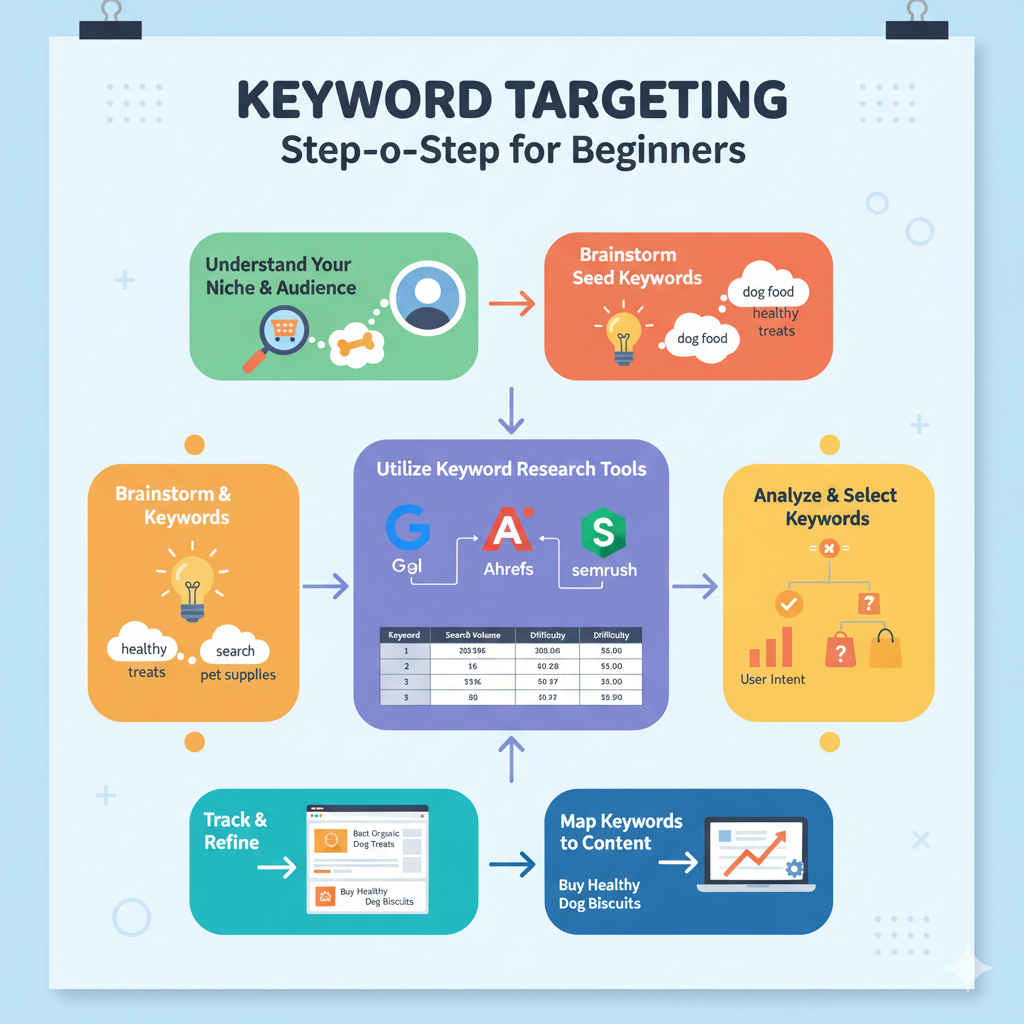
Related: SEO SERVICE
Understanding Keyword Targeting
Keyword targeting is a fundamental aspect of on-page SEO, involving the strategic selection and placement of keywords to enhance search engine visibility. A visual guide to keyword targeting and on-page SEO can simplify this process for beginners.
Begin by identifying relevant keywords that align with your content and audience intent. Utilize keyword research tools to assess search volume and competition, focusing on terms that balance demand with achievability.
Once selected, incorporate your primary keyword naturally into key on-page elements:
- Title Tag: Craft a compelling title that includes your main keyword, accurately reflecting the page’s content.
- Meta Description: Write a concise summary with the keyword to encourage click-throughs from search results.
- Headings (H1, H2, H3): Structure your content with headings that incorporate relevant keywords, enhancing readability and SEO.
- Body Content: Integrate keywords naturally within the text, maintaining a conversational tone to avoid keyword stuffing.
- URL Structure: Ensure URLs are clean and include the primary keyword for better indexing.
- Image Alt Text: Use descriptive, keyword-rich alt text for images to improve accessibility and search rankings.
By following these steps, you can effectively implement a visual guide to keyword targeting and on-page SEO, enhancing your website’s search engine performance.
Related: Free Consultation
Selecting Primary and Secondary Keywords
Selecting primary and secondary keywords is a fundamental step in crafting an effective SEO strategy. A visual guide to keyword targeting and on-page SEO can simplify this process for beginners.
Primary Keywords:
- Definition: These are the main terms that encapsulate the core topic of your content.
- Selection Criteria: Choose keywords with high search volume and relevance to your audience’s intent.
- Placement: Incorporate primary keywords naturally into the title tag, H1 heading, and the first 100 words of your content.
Secondary Keywords:
- Definition: These are related terms that support the primary keyword and provide context.
- Selection Criteria: Opt for long-tail keywords with lower competition but sufficient search volume.
- Placement: Use secondary keywords in subheadings, meta descriptions, and throughout the content to enhance relevance.
Best Practices:
- Keyword Research: Utilize tools to identify keywords that align with your content and audience needs.
- Content Quality: Ensure your content is informative, engaging, and provides value to readers.
- Natural Integration: Avoid keyword stuffing; integrate keywords seamlessly to maintain readability.
- On-Page Optimization: Optimize title tags, meta descriptions, and headings to improve search engine visibility.
By following these guidelines, you can effectively select and implement primary and secondary keywords, enhancing your content’s SEO performance.
Related: How long does it take to rank for a keyword?
Strategically Placing Keywords on Your Page
Effectively placing keywords on your page is crucial for enhancing search engine visibility and user engagement. A visual guide to keyword targeting and on-page SEO can simplify this process, especially for beginners.
Begin by conducting thorough keyword research to identify terms that align with your content and audience intent. Incorporate these keywords naturally into your content, avoiding overuse to maintain readability.
Strategically position your primary keyword in key areas such as the title tag, H1 heading, and within the first 100 words of your content. This placement signals relevance to search engines and users alike.
Utilize header tags (H1, H2, H3) to structure your content, making it easier for readers to navigate and for search engines to understand the hierarchy of information. Including relevant keywords in these headers can further optimize your page.
Ensure your URL structure is clean and descriptive, incorporating your primary keyword to enhance both user experience and search engine indexing.
Optimize images by using descriptive, keyword-rich filenames and alt text. This practice not only improves accessibility but also provides additional opportunities for keyword integration.
Implement internal linking to connect related content within your site, encouraging users to explore more and helping search engines crawl your site more effectively.
Regularly monitor your page’s performance using analytics tools to assess the effectiveness of your keyword placement and make necessary adjustments to improve your SEO strategy.
By following these steps, you can create a well-optimized page that appeals to both search engines and users, enhancing your site’s visibility and engagement.
Related: How many keywords should I use in an article
Enhancing Content with Multimedia
Enhancing your content with multimedia elements is a powerful strategy to improve user engagement and search engine optimization (SEO). Incorporating images, videos, and infographics can make your content more appealing and informative. A visual guide to keyword targeting and on-page SEO can further assist in optimizing your content.
To effectively integrate multimedia, ensure that each element is relevant to your content and enhances the user’s understanding. For instance, using images that illustrate key points can make your content more engaging. Additionally, videos can provide in-depth explanations, catering to different learning preferences.
When adding multimedia, it’s crucial to optimize each element for SEO. This includes using descriptive file names and alt text that incorporate relevant keywords. Proper optimization helps search engines understand the content of your images and videos, improving your site’s visibility.
Furthermore, ensure that your multimedia elements are mobile-friendly. With the increasing use of mobile devices, having responsive design is essential for providing a seamless user experience.
By thoughtfully incorporating multimedia and following best practices for keyword targeting and on-page SEO, you can create content that is both engaging and optimized for search engines.
Boost your online visibility with a reliable SEO agency North York. From keyword research to on-page optimization and link building, they help local businesses attract more traffic and grow online.
Continuous Monitoring and Optimization
Embarking on the journey of keyword targeting and on-page SEO can be streamlined with a visual guide that outlines each step. This approach ensures that beginners can effectively optimize their content for search engines.
1. Keyword Research
- Identify Relevant Keywords: Utilize keyword research tools to discover terms that align with your content and audience intent.
- Analyze Search Volume and Competition: Assess the popularity and competitiveness of your chosen keywords to prioritize effectively.
2. Content Creation
- Incorporate Keywords Naturally: Integrate your target keywords seamlessly into your content to maintain readability.
- Focus on Quality and Relevance: Ensure your content provides value and addresses the needs of your audience.
3. On-Page Optimization
- Optimize Title Tags and Meta Descriptions: Craft compelling titles and descriptions that include your target keywords to improve click-through rates.
- Use Header Tags Strategically: Organize your content with header tags (H1, H2, H3) to enhance readability and SEO.
- Implement Internal Linking: Link to other relevant pages within your site to boost SEO and user engagement.
- Optimize Images and Alt Text: Ensure images are relevant and include descriptive alt text to improve accessibility and SEO.
4. Continuous Monitoring and Refinement
- Track Performance Metrics: Regularly monitor your website’s performance to identify areas for improvement.
- Adjust Strategies Accordingly: Be prepared to refine your keyword targeting and on-page SEO strategies based on performance data.
By following this visual guide, beginners can systematically approach keyword targeting and on-page SEO, leading to improved search engine rankings and enhanced user experience.
Conclusion
In conclusion, mastering keyword targeting and on-page SEO is essential for enhancing your website’s visibility and user engagement. By conducting thorough keyword research, selecting relevant and high-intent keywords, and strategically incorporating them into your content, you can align with user search intent and improve search engine rankings. Optimizing on-page elements such as title tags, meta descriptions, headings, and URLs ensures that your content is both user-friendly and search engine-friendly. Additionally, creating high-quality, unique, and engaging content, along with implementing a well-structured internal linking strategy, further boosts your site’s performance. Regularly monitoring and refining your SEO efforts will help you adapt to changing search trends and maintain a competitive edge in the digital landscape.
FAQ:
What is keyword targeting and why is it important?
Keyword targeting is the process of selecting and using the right keywords to attract your target audience. It helps search engines understand your content and can increase your website traffic.
What does on-page SEO include?
On-page SEO refers to optimizing elements within your web pages, such as page titles, meta descriptions, URLs, headings, images, and internal links. The goal is to improve your site’s ranking in search results.
How can I find the right keywords?
You can use keyword research tools like Google Keyword Planner, SEMrush, or Ahrefs. Consider search volume, competition, and user intent when choosing keywords.
What is the difference between short-tail and long-tail keywords?
Short-tail keywords are short and broad (e.g., “shoes”) with high search volume but more competition. Long-tail keywords are longer and more specific (e.g., “best running shoes for women”) and often convert better.